How to market your SaaS (or app) after you build it
Give it 30 days, one job a week: pages and free listings, a launch, pages that answer buyers' questions, then a small ad test with 2 or 3 videos. Expect slow search traffic: ours sat at 2 to 5 Google clicks a day for about 2.5 months. A launch video from ReelMade costs $9.99.
Updated
The 30-day plan at a glance
| Week | What you do | Done when | Cost |
|---|---|---|---|
| Week 1: Make it findable | What you doOne clear page per use case, Search Console, Bing Webmaster Tools and IndexNow, Free directories, by hand, A launch video | Done whenYour sitemap is in Search Console and Bing, you are listed on 4 directories, and you have a launch video. | CostFree, plus $9.99 for the video |
| Week 2: Launch where people look | What you doProduct Hunt, for feedback, Show HN, only if people can try it, Communities where your buyers already are, Post in public | Done whenYou launched in two places, answered every comment and wrote down the three questions people asked most. | CostFree |
| Week 3: Pages that get found and cited | What you doComparison and alternative pages, Answer-first help pages, Get cited by ChatGPT and Perplexity, Read what Search Console shows | Done whenYou have two comparison pages and five help pages, each answering its question in the first two sentences. | CostFree |
| Week 4: A small paid test | What you doTwo or three video ads, one audience, Optimize for a sign-up, not a payment, Measure three things, Know when to stop | Done whenYou know your cost per sign-up for each opening, and which one to keep. | CostYour ad budget, plus the videos |
Week 1
Make it findable
Search engines and directories know you exist, and every page says plainly who the product is for.
Done when: Your sitemap is in Search Console and Bing, you are listed on 4 directories, and you have a launch video.
One clear page per use case
Most marketing for SaaS starts here. Your home page can rank for one idea. Write one page per job the product does, in the words a buyer types: "invoice template for freelancers", not "flexible billing primitives". Each page answers in its first two sentences, shows a real screen, states the price and has one button.
Search Console, Bing Webmaster Tools and IndexNow
Verify your domain in Google Search Console and submit your sitemap. Google says crawling can take from a few days to a few weeks, and asking it to recrawl the same URL again doesn't speed it up. Add the site to Bing Webmaster Tools too, and ping IndexNow on every deploy: Bing, Yandex, Naver, Seznam.cz, Yep and Amazon take it. Google isn't on IndexNow's list.
Free directories, by hand
List the product yourself on Uneed, Fazier, SaaSHub and AlternativeTo, with a fresh description for each. Uneed's free option puts you at the back of its launch line; $14.99 fast-tracks you to a slot in about 14 days. Expect a few visits and your first links, not customers.
A launch video
Make one 30-second video that says who it's for, the one thing to remember and what to do next. You will use it all month: launch posts, the top of your landing page and the ads in week 4.
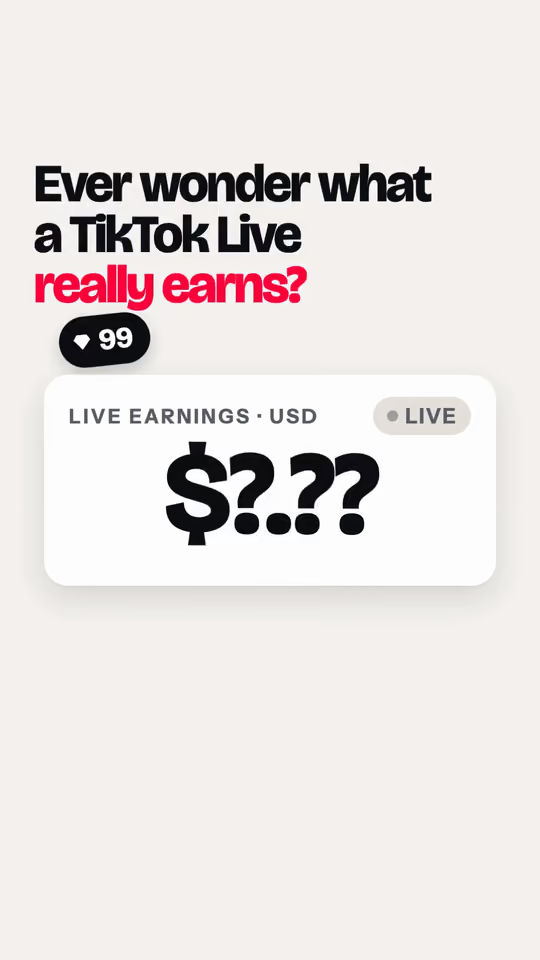
A launch video, made from a landing page
A dollar meter stuck on question marks wakes up when a TikTok handle is pasted: each gift lands as estimated dollars with the sender's name, free for one creator.
Read its scriptWeek 2
Launch where people look
Real people try the product and tell you what's unclear.
Done when: You launched in two places, answered every comment and wrote down the three questions people asked most.
Product Hunt, for feedback
Launches go live at 12:01 AM Pacific time. The ranking uses upvotes, time since posting, comments and factors Product Hunt doesn't publish, and asking specifically for upvotes is against its policy: ask for feedback and comments instead. Your gallery images should be 1270 x 760, and a video has to be a YouTube link.
Show HN, only if people can try it
Hacker News takes Show HN posts for things people can try right away. Landing pages and sign-up pages are off topic, and asking friends to upvote or comment is not allowed. Post when there's a free way in, then stay and answer every comment.
Communities where your buyers already are
Founder communities are full of other founders. Find the subreddits, Slack groups and forums where your buyers ask for help, read their rules, and answer questions for a week before you mention your product. Most of our own product's links came from Reddit comments that answered someone's question.
Post in public
Share what you are learning on X or LinkedIn: real numbers, screenshots, mistakes. It brings other builders, which helps if builders are your buyers and is mostly noise if they aren't.
Week 3
Pages that get found and cited
Pages that answer what buyers search and what they ask ChatGPT.
Done when: You have two comparison pages and five help pages, each answering its question in the first two sentences.
Comparison and alternative pages
Buyers who know the category search "{rival} alternative" and "{you} vs {rival}". Write those pages fairly: say where the rival is the better pick, and put a date on every price.
Answer-first help pages
Turn every question from week 2 into its own short page whose first two sentences answer it: "Does it work with Stripe?", "Can I export to CSV?". Short, factual help pages are what AI assistants quote.
Get cited by ChatGPT and Perplexity
Assistants mostly cite the vendors' own pages, so the pages you write are your best shot. Be specific, include rivals fairly, show prices with a date, and keep the pages crawlable without JavaScript.
Read what Search Console shows
After two weeks, look at the searches you appear for. A page sitting in positions 8 to 20 for a real query is the cheapest win: make it answer that query better.
What we found when we asked the assistants
- AI answers that named ReelMade
- 0 of 31
- Of their citations were vendors' own pages
- 72%
On October 27, 2026 we asked ChatGPT, Perplexity, Gemini and Google AI Overviews 8 questions a buyer of our product would ask. ReelMade was named in none of the 31 answers. 72% of the pages they cited were written by vendors: their product, help and pricing pages and their own comparisons. Independent editorial pages were 13%. The pages you write yourself are what gets you cited.
Week 4
A small paid test
Facebook ads for SaaS work best as a test at first: learn which message makes strangers sign up, with money you can afford to lose.
Done when: You know your cost per sign-up for each opening, and which one to keep.
Two or three video ads, one audience
Make 2 or 3 versions of the same ad with different openings: the problem, the result, a screen. Run them on Facebook and Instagram Reels to one audience, at a budget you can lose.
Optimize for a sign-up, not a payment
Meta's delivery needs a steady flow of the event you optimize for before it leaves its learning phase, and a new product sees few payments. A sign-up or a trial start is an event it can learn from.
Measure three things
Cost per sign-up, the share of sign-ups who do the product's main action, and which opening holds viewers. Keep the best version, replace the other two with new openings and run another week.
Know when to stop
If no version brings sign-ups at a cost your price can carry, fix the page or the offer before you spend more. Ads make a page that converts bigger; they don't fix one that doesn't.
What happened with our own product
TikMonitor (tikmonitor.com) is a TikTok LIVE analytics product made by the team behind ReelMade. This is its Google traffic, start to now.
- First Google click, the day after the sitemap went in (April 2026)
- Next day
- At 2 to 5 clicks a day before it grew
- 2.5 months
- Clicks a day by October 2026
- About 310
- Backlinks in total, mostly Reddit comments, none bought
- About 15
What grew it wasn't links. It was pages: one page for each creator it tracks, so every creator's fans could find theirs, plus comparison pages and guides that answer the question in their first lines.
The flat months are normal. Search rewarded the product once there were enough useful pages for it to rank, so the work in weeks 1 and 3 is the work that compounds.
What not to spend money on
Each of these is sold to new founders every day. None of them builds anything you keep.
Bought backlinks
Google's spam policies list buying or selling links for ranking as link spam. Links earned by answering questions, like our Reddit comments, are the ones that last.
"Submit to 300 directories" gigs
The handful of directories your buyers read are worth more than hundreds nobody visits. Do four or five by hand, with a real description each.
Upvote sellers
Product Hunt says upvotes that look like spam can rank a product lower, and Hacker News doesn't allow asking friends to upvote. Bought votes risk the one launch day you get.
A big ad budget before the page converts
Spend on ads once a small test shows people sign up. Before that, more budget only buys a clearer view of a page that doesn't work.
SaaS marketing: questions
Expect weeks for the first visits and months for steady traffic. Google says crawling takes a few days to a few weeks. Our own product got its first click the day after its sitemap went in, sat at 2 to 5 clicks a day for about 2.5 months, and reached about 310 a day by October 2026.
Run a small test, not a campaign. In week 4, 2 or 3 video ads to one audience tell you within days which message makes strangers sign up. Search takes months, so the two work together: ads teach you the words, and your pages use them.
For feedback and a first wave of visitors, yes; as your growth plan, no. Launches go live at 12:01 AM Pacific, and asking for upvotes is against its policy. Prepare 1270 x 760 gallery images and a YouTube link for your video, then spend the day answering comments.
Create the launch ahead of time with a short tagline, gallery images at 1270 x 760, your video as a full YouTube link and a first comment saying why you built it. It goes live at 12:01 AM Pacific. Share it, ask for feedback rather than upvotes, and reply to every comment.
Not a news blog. You need pages that answer what buyers search: one per use case, comparisons with rivals, and short help pages. Our own product grew on those, not on announcements.
Spend time instead of money; that is how to market an app on no budget. Weeks 1 to 3 cost nothing else: use-case pages, Search Console, free directory listings, Product Hunt, Show HN and answering questions in your buyers' communities. The only paid step is the ad test, and a launch video from ReelMade is $9.99.
It can for apps people use on their own, like creator tools, study apps or personal finance. For B2B SaaS marketing, where a team buys the software, LinkedIn and search usually reach the buyer better. The same 9:16 video runs on TikTok, Reels and Shorts, so testing it costs little.
Keep reading
- SaaS launch videoA 9:16 launch video made from your landing page.
- SaaS and app ad ideasAd ideas for software and apps, with real films.
- AlternativesOur own comparison pages, written the way week 3 says.
- What a video ad costsAgencies, freelancers, UGC and AI tools, each sourced.
- Safe zone checkerCheck that your ad's words stay clear of each app's buttons.
Sources
- Google Search Central, "Ask Google to recrawl your URLs (updated December 10, 2025)", https://developers.google.com/search/docs/crawling-indexing/ask-google-to-recrawl, checked October 28, 2026.
- IndexNow.org, "FAQ", https://www.indexnow.org/faq, checked October 28, 2026. Participating engines listed there: Amazon, Bing, Naver, Seznam.cz, Yandex and Yep.
- Uneed, "Pricing", https://www.uneed.best/pricing, checked October 28, 2026 (the company's own page).
- Product Hunt, "Launch Guide: Preparing for launch", https://www.producthunt.com/launch/preparing-for-launch, checked October 28, 2026.
- Product Hunt, "Launch Guide: How to promote your Product Hunt launch", https://www.producthunt.com/launch/sharing-your-launch, checked October 28, 2026.
- Product Hunt, "Launch Guide: Launch Day questions", https://www.producthunt.com/launch/launch-day-questions, checked October 28, 2026.
- Product Hunt Help Center, "How to post a product", https://help.producthunt.com/en/articles/479557-how-to-post-a-product, checked October 28, 2026.
- Hacker News, "Show HN guidelines", https://news.ycombinator.com/showhn.html, checked October 28, 2026.
- Google Search Central, "Spam policies for Google web search (updated August 28, 2026)", https://developers.google.com/search/docs/essentials/spam-policies, checked October 28, 2026.
- Meta Business Help Center, "About the learning phase", https://www.facebook.com/business/help/112167992830700, checked October 28, 2026.
Our own numbers (TikMonitor's Google traffic and the AI answers we measured) come from Google Search Console and an OpenSEO AI visibility run on October 27, 2026.
Your ad, made from your own site.
Paste your link, answer a few questions, watch it come together. Sign in only when you're ready to make the film.